
 By
By 
In a world where water scarcity affects billions, the ability to find hidden groundwater has become one of the most empowering and life-changing skills imaginable. Imagine standing in a dry, parched landscape, knowing that beneath your feet, ancient rivers and aquifers hold the water that could transform your community. The key to unlocking these hidden resources lies in a remarkable piece of technology—an underground water detector. These sophisticated instruments act as silent whisperers, listening to the earth’s subtle signals and translating them into a clear picture of what lies below. For farmers, communities, and explorers alike, they are transforming the search for water from a desperate gamble into a science-based certainty.
The beauty of modern groundwater detection is its remarkable effectiveness. In regions where drilling without guidance once resulted in failure rates as high as 70 percent, the introduction of geophysical methods has dramatically reversed these odds. In one notable project in Nigeria, the use of electrical resistivity and electromagnetic methods reduced borehole failure rates to just 17 percent, saving millions in wasted drilling costs . This is not just about finding water more efficiently; it is about bringing hope and sustainability to communities that depend on reliable access to this precious resource.
The Art Of Listening: How Detectors Hear Beneath The Surface
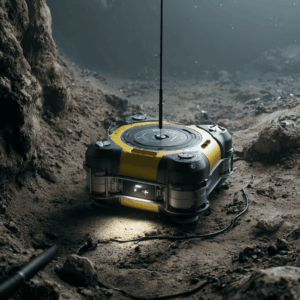 So how does an underground water detector work its magic? The principles are grounded in solid geophysics. Different underground materials—whether dry rock, clay, or water-saturated sand—have distinct electrical properties. An underground water detector works by sending a signal into the ground and analyzing its reflections to detect the presence of water . By measuring how these signals travel through different materials, the detector identifies zones where water is likely present.
One widely used approach is the resistivity method, which measures how easily electrical currents flow through the ground . Water, particularly if it contains dissolved minerals, is a good conductor of electricity. Dry rock or sand is not. By measuring the electrical resistance of the ground at various depths and locations, the detector creates a profile of the subsurface, highlighting areas where water-saturated materials exist. Techniques like Electrical Resistivity Tomography (ERT) can map these electrical variations in two or even three dimensions, providing a detailed picture of aquifer geometry .
A complementary method is the self-potential (SP) method. This approach measures tiny natural electrical fields generated by groundwater flow . As water moves through permeable soil, it generates an electrical current (called a streaming potential) that can be measured at the surface. Positive SP anomalies are often associated with upward groundwater flow along fault zones—making them excellent indicators of productive water sources .
Empowering Communities: Real-World Impact
The true power of an underground water detector is best understood through its real-world impact. In Ghana’s rural communities, where the search for potable water has been a major challenge, geophysical methods have been instrumental in improving drilling success rates . By integrating geological, hydrogeological, and aerial photo interpretation with land-based geophysical surveys, organizations can select drilling sites with much greater confidence than traditional methods alone.
One recent project in Northern Ghana used geophysical surveys to identify five drilling locations, each of which resulted in a successful borehole. These wells were equipped with solar-powered water supply systems and 5,000-liter storage tanks, providing both domestic water and irrigation for local farms . The availability of water enabled the creation of nearly 24,000 square meters of irrigated farmland, benefiting an estimated 13,500 people. This is not just about technology; it is about transforming lives.
The Science Behind The Success
The success rates achieved with modern detection technology are not accidental. They are the result of decades of research and development. Hydrogeophysics, the field that combines geophysics with hydrology, has proven to be a comprehensive tool for understanding groundwater-related geological structures . By integrating multiple geophysical methods—such as ERT, self-potential, seismic refraction, and electromagnetic surveys—researchers can build a more complete picture of the subsurface.
In a study in Western Türkiye, for example, the integration of ERT, induced polarization, self-potential, and seismic refraction tomography effectively characterized a catchment area. The results revealed how groundwater rises along fault zones, which act as barriers and controls on water flow . Such detailed understanding is essential for sustainable water management and protection of vulnerable aquifers.
Listening To The Earth’s Whispers
The underground water detector is a modern miracle, a technology that turns the earth’s whispers into clear, actionable knowledge. It is the water whisperer that empowers farmers, communities, and nations to find the life-giving resources hidden beneath their feet. By replacing guesswork with science, it saves not just money, but hope. In a changing climate and a thirsty world, the ability to listen to what lies beneath is more than a skill—it is a necessity. With the right tools, we can all become water whisperers, unlocking the treasures of the earth and building a more water-secure future for all.





Comments